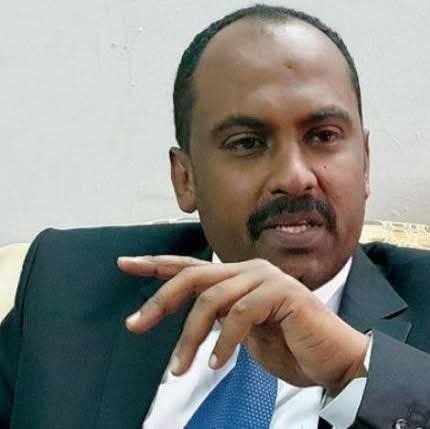
Mohamed El-Faki Suleiman - Former Member of the Sudanese Sovereignty Council
More than any other nation, the Sudanese people understand the true nature of the Muslim Brotherhood Movement. They have lived through its ideology firsthand, an ideology that has plunged their country into decades of turmoil and suffering. For decades, Sudan was left to confront this transnational organization solely on its own, a network with extensive financial resources, media channels, intelligence capabilities, and the ability to mobilize fighters globally, all underpinned by an ideological interpretation of Islam that recognizes no boundaries. In their worldview, the state encompasses all Muslim lands, giving them the freedom to operate with impunity.
Despite the Muslim Brotherhood Movement’s international scale and operational mobility, its members have often relied on a rhetoric accusing others of foreign allegiance domestically. This rhetorical maneuver effectively constrained opposition forces to marginal activities such as capacity-building workshops and open discussions on democratic reform. Meanwhile, the Muslim Brotherhood Movement freely exchanges funding, weaponry, intelligence, and fighters without limitation. Any efforts to formally classify the Brotherhood Movement as a criminal or extremist organization should begin with Sudan’s experience, which is the most complete case study available. Sudanese Brotherhood members first participated in parliamentary governance, then consolidated power, ultimately ruling unilaterally for three decades, leveraging military structures.
During this period, Sudanese citizens struggled largely without meaningful international support, even as the Brotherhood Movement continued to receive substantial external resources as the recognized political authority. Sudan became both a sanctuary and logistical hub for the transnational network, with its passports used by leadership figures, while ordinary citizens—particularly regime opponents—were denied travel documents. Throughout these decades, Sudanese citizens witnessed a paradox: the international community intervened to limit the Brotherhood Movement’s influence elsewhere, yet systematically ignored its actions within Sudan. This reinforced a perception of marginalization, as if the country were permanently left to the mercy of a group whose activities elsewhere were of higher priority to global actors. Following the December 2018 revolution and the April 2019 transition, Sudanese citizens prioritized dismantling the Brotherhood Movement’s grip on state institutions and holding them accountable for decades of abuses. Yet international support was minimal, often characterized by hesitancy and indecision, enabling the Brotherhood Movement to mislead the international community again and to undermine transitional governance, directly precipitating the current conflict in an already fragile state. Sudan’s experience offers the clearest insight into the Brotherhood Movement’s operations. Its citizens, who have borne the highest costs, possess an unparalleled understanding of the organization’s structure, methods, and transnational reach. Consequently, an effective strategy to counter this global network requires a coordinated international coalition with operational capabilities and intelligence-sharing mechanisms capable of mitigating the risks posed by an organization adept at alternating between governance and insurgency, and at assuming multiple identities simultaneously. Sudan is not a marginal state. It is the country whose blood has paid the price for confronting the criminal ambitions of the Muslim Brotherhood Movement.



