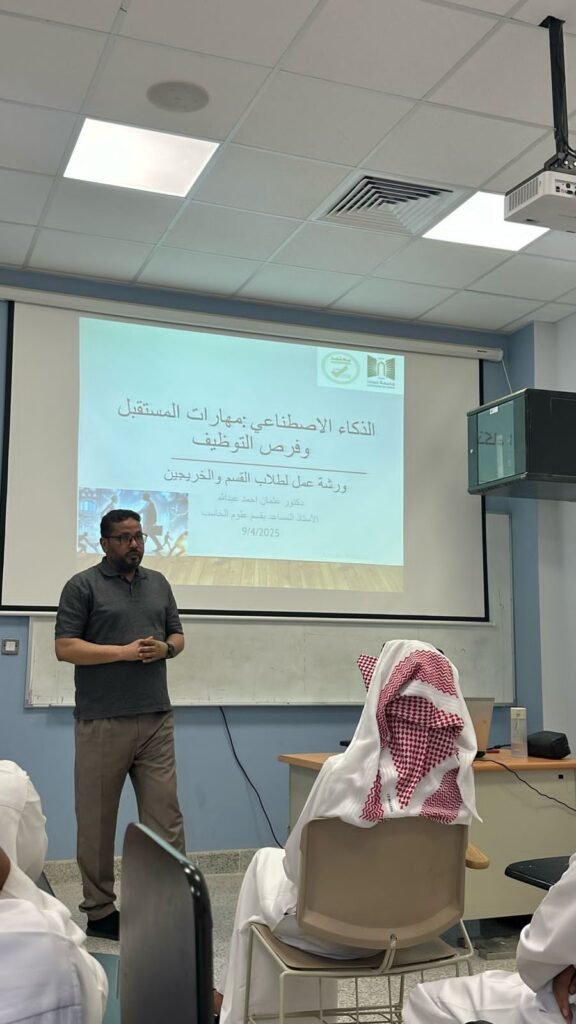
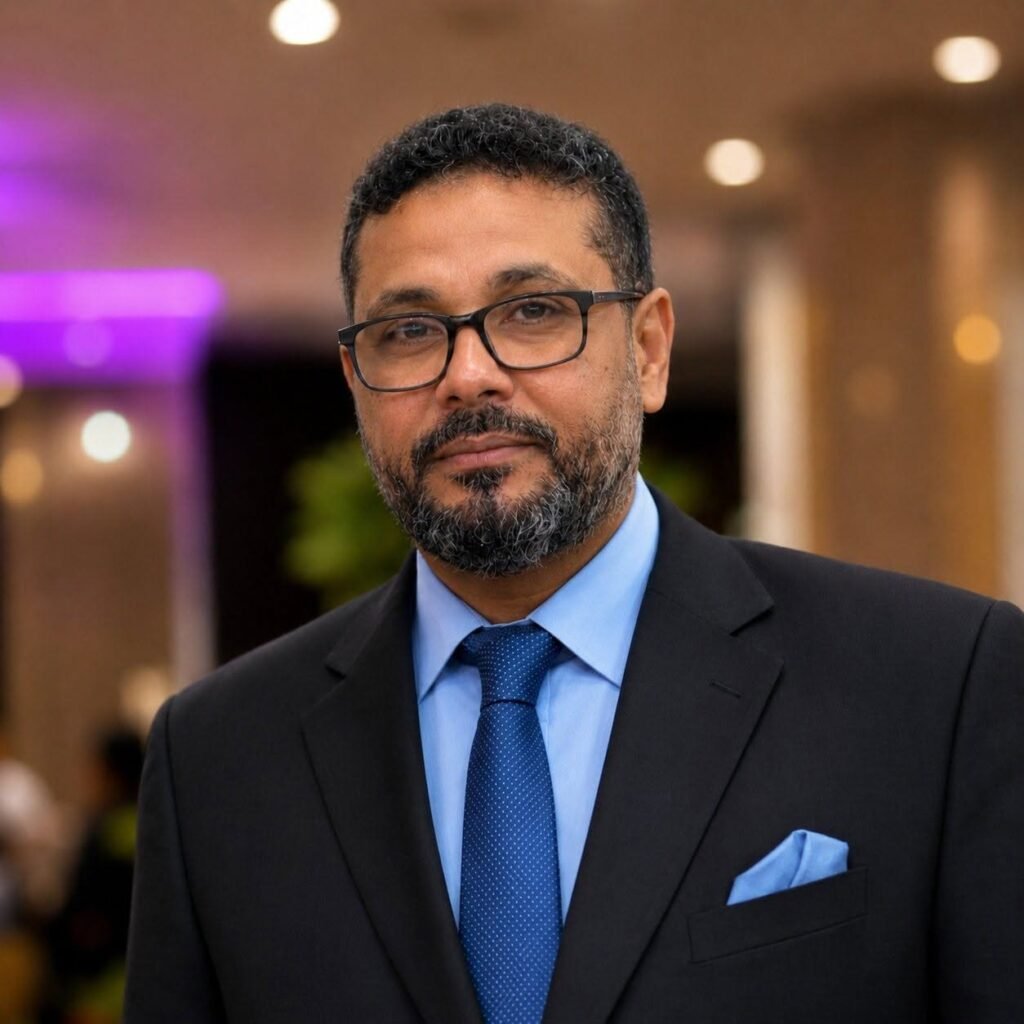
Exclusive Interview - Dr. Osman Abdullah
We're pleased to welcome Dr. Osman Ahmed Abdullah, a prominent academic and scientist. In an era of accelerating digital transformations, artificial intelligence emerges as a driving force for the future of nations. To shed light on the promising horizons and challenges of this field, we host today a prominent academic and scientific figure, Dr. Osman Ahmed Abdullah. Born and raised in the city of Wad Madani, Dr. Osman received his education through all stages there, earning his bachelor’s and master’s degrees. He continued his academic journey and obtained his PhD in Artificial Intelligence from the prestigious University of Petronas in Malaysia.
Dr. Osman, an Assistant Professor in the Department of Computer Science at the University of Tabuk in the Kingdom of Saudi Arabia, has more than 20 years of academic and research experience. In addition to his scientific contributions, he has a deep interest in Sudan’s political and social issues, aiming to provide opinion and analysis on public affairs. In this interview, we explore with him his vision for artificial intelligence and how it can contribute to building a better future for Sudan, while reviewing the challenges and opportunities considering the current reality.
Despite the enormous challenges facing Sudan, hopes for using artificial intelligence to achieve a qualitative leap in various vital sectors remain alive. In this interview, we delve into the depths of this field with an expert who reveals its potential and sheds light on the current reality and the desired future.
To begin with, how would you define artificial intelligence for a non-specialist?
Artificial intelligence is a branch of computer science that aims to develop computer systems capable of simulating the human mind in its functions and structure, and possessing the ability to perform tasks intelligently, such as learning, problem-solving, and decision-making. For example, the Google Translate app learns from millions of sentences to translate a new sentence it has never encountered before.
How was your academic journey in specializing in artificial intelligence, and why did you choose it?
My journey with artificial intelligence began in the late 1990s when I studied it as a compulsory course in college. I was strongly drawn to the field when I discovered that a simple program could outperform my professor in classifying research papers. Since then, I decided to dedicate this science to serving our reality. Then came the PhD stage in artificial intelligence, where my thesis addressed improving the parameters of artificial neural networks using genetic algorithms.
Are there current uses or emerging experiments for artificial intelligence in Sudan?
Sudan is still in the early stages, but there are good attempts despite major challenges such as war and limited resources. For example:
Agriculture, irrigation, and weather: There are experiments using artificial intelligence to analyze data on weather, soil, and water to improve agricultural quality through precise analysis and forecasting. In June 2023, the United Nations Food and Agriculture Organization (FAO) and the Sudanese Ministry of Agriculture signed an agreement to use a “drought forecasting” model based on artificial neural networks. This model analyzes free satellite images (Sentinel-2) and climate data, then issues early warnings to farmers. As a result, after one season (autumn 2023), 150,000 hectares were covered in Kassala and Blue Nile states, and crop loss rates decreased by 15% compared to the previous season, according to the FAO report issued in January 2024.
Education: Many young people are interested in artificial intelligence through online study on platforms such as Coursera and other free platforms. There are also emerging experiments to develop AI-based software. In July 2022, UNICEF and the Sudanese Ministry of Education launched the Smart Learning Sudan project under the Giga program to connect schools to the internet. The system uses a machine learning recommendation engine called “Automated Assessment” to analyze student performance on the Moodle platform and generate a personalized learning path for each student from 250 digital lessons in mathematics and science for grades 7 to 9. After one academic year (2022–2023), the platform included 25 secondary schools in Khartoum, Sennar, and Kassala states, with 18,600 students enrolled. The average mathematics scores in the final exam rose by 12% compared to non-participating schools, according to the independent evaluation report issued by UNICEF in March 2024.
Health: There are practical experiments using artificial intelligence in healthcare, such as benefiting from Google’s medical imaging package to assist doctors in diagnosing diseases and monitoring treatment progress. There are also experiments in medical software based on AI for disease diagnosis and other services.
How can artificial intelligence contribute to solving chronic problems such as agriculture, education, health, and resource management?
Artificial intelligence can provide innovative and valuable solutions if used scientifically and correctly. For example:
- Agriculture: Imagine a small program that tells the farmer: “Plant this specific crop this year because the climate will be suitable, and the soil will not be greatly affected.” This saves water, effort, and increases production.
- Education: We can develop smart applications that provide lessons to students in remote villages, even if there are not enough teachers, meaning every student gets lessons suited to their level.
- Health: Developing systems to analyze patient data that provide doctors with predictive information, such as: “There is an upcoming malnutrition crisis; prepare for it early.” This can save many lives.
- Resource Management: Artificial intelligence can analyze water or electricity data and show how to distribute it efficiently instead of continuous waste.
However, it is important to emphasize that we need appropriate infrastructure and continuous training for specialists to enable them to handle these tools.
To what extent are Sudanese institutions aware of the importance of data and its analysis? Are there good practices to build upon?
Frankly, the current situation in Sudan is difficult due to the war, and institutional awareness of the value of data is insufficient for several reasons:
First, destroyed infrastructure: The war has largely destroyed systems for collecting, storing, and processing data.
Second, lack of expertise: There is a shortage of data analysis specialists, and the field has been affected by the massive migration of skilled professionals.
Third, absence of laws: There are no clear laws to protect data, leading to low data sharing.
Nevertheless, there are good attempts to use data analysis tools to document important events and detect falsification. If these experiences are built upon and supported, we may achieve excellent results.
How can artificial intelligence be integrated with digital transformation and data analysis to achieve a leap in the quality and ease of delivering public services?
To bring about a qualitative leap in public services, artificial intelligence must be linked to digital transformation through several paths:
- Providing a stable telecommunications network and high-speed internet: Without fast and stable internet, artificial intelligence will be useless. Therefore, focus must be placed on improving the performance of communication and internet networks.
- Training: Public and private sector employees must be trained in modern tools such as data analysis and artificial intelligence programs.
- Databases: Attention must be given to developing database systems for all sectors (health, education, agriculture, etc.).
- Smart applications: It is important to develop smart applications to facilitate government services, such as civil registry, passports, traffic, and others.
- Partnerships: It is essential to form partnerships with global institutions such as Google, Microsoft, Cisco, Huawei, and Oracle to accelerate technological development.
Artificial intelligence is used for dangerous purposes, especially in wars and conflicts, including what is known as “deepfake” technology to create fake videos, audio recordings, or images, leading to social, ethical, and political problems. What is the impact of “deepfake” technology on the current war context in increasing fabrication and misinformation?
Certainly, the use of deepfakes has caused many cases of misinformation and fabrication that have contributed to prolonging the war and caused many problems for individuals, political, and military organizations. In March 2022, social media circulated a deepfake video of Ukrainian President Volodymyr Zelenskyy calling on the army to surrender, causing temporary confusion in Ukrainian military discourse.
Can deepfakes be combated using artificial intelligence tools themselves?
Yes, we can use artificial intelligence to combat deepfakes through:
- Deepfake detection programs: Tools such as Deepware analyze videos and detect signs of falsification, such as strange eye movement or unnatural voice.
- Precise analysis: Systems like Hive examine content and provide results on whether it is fake or not, although they are not free and require a good connection to work efficiently.
Regarding public policies and legislation, and with the collapse of the information infrastructure amid the war and the impossibility of building a database, what is the outlook, and what is required?
The situation in Sudan is extremely difficult due to the war, but reform is not impossible. To achieve positive results, we must start from scratch by collecting simple data, such as using mobile applications to photograph and document events. Temporary solutions can also be adopted, such as:
- Cloud Computing: For storing data instead of local servers.
- Data protection laws: Laws must be enacted to protect data to increase confidence among institutions and citizens.
- International partnerships: Seek assistance from international organizations such as the United Nations or global tech companies to accelerate the process.
What is your vision for developing university curricula in Sudan to keep pace with the digital revolution and artificial intelligence?
For Sudanese universities to be at the forefront, we must:
- Add modern courses: Teach subjects such as data science using Python, machine learning, and cybersecurity.
- Practical training: Through partnerships with institutions like Amazon, Google, or Huawei, students can work on real projects.
- Distance education: Using distance learning platforms to enable students in remote areas to study.
- Linking to reality: Curricula should focus somewhat on Sudan’s problems, such as agriculture and health.
- Encouraging self-learning: By providing ongoing free courses for students and workers.
What are the most prominent open-source or free artificial intelligence tools that a Sudanese student or institution can use today, and what different roles do each tool play?
There are many open-source or free tools, including:
- OpenAI Whisper: Used for speech-to-text conversion. It can support Sudanese colloquial dialect after subsequent training and can be used to record lectures and convert them into text files for students with hearing disabilities.
- Hugging Face Transformers: A ready-made library for Arabic language models such as AraBERT for text analysis. It can be used to create a question-and-answer bot for farmers’ inquiries about pest control.
- Google Colab: A free cloud-based Python programming environment that provides GPUs for training AI models. It is used for training models, for example, a model to detect cotton leaf diseases using photos taken by mobile phone.
- QGIS + Semi-Automatic Classification Plugin: Used for free analysis of satellite images. It can be used to draw maps of moisture and desertification for small agricultural projects.
- Orange Data Mining: A graphical (drag-and-drop) tool used for data analysis without writing code. It can be used to analyze patient data from a rural hospital to detect patterns of malnutrition.
During the recent visit of the U.S. President to the Arab region, trade agreements related to artificial intelligence received the largest share of joint projects. How do you see the future of these countries after implementing these agreed-upon projects? And how do you see the future of countries that do not have the necessary resources to implement such projects?
Rich countries investing in artificial intelligence will lead to significant development in services, increased efficiency, and attraction of global investments. As for poor countries, if they do not invest in technology, the gap with advanced countries will widen. However, there is hope if partnerships with other countries are formed and the energies of young people are harnessed through self-education and quality free courses.
What opportunities can Sudan benefit from through cooperation with international countries and institutions in these fields?
Sudan has great opportunities if the door to cooperation is opened, through:
- Knowledge transfer: Establishing partnerships with leading institutions such as Microsoft to help build smart systems.
- Training: International organizations such as UNESCO can provide free courses for young people.
- Funding: Global and regional development banks or donor countries can support building digital infrastructure.
- Joint projects: Developing smart agriculture or e-health applications with external funding.
What advice do you have for Sudanese students wishing to study artificial intelligence?
In my opinion, the beginning can be simple: Learn a programming language like Python, which is easy and available online. It is essential to make full use of the internet, where there are free courses on platforms such as Coursera and edX. Also, communicate with others by joining technical communities online such as Reddit or Discord.
Students need to think about local issues, such as trying to address problems like agriculture or health in Sudan through their projects. I also advise them not to give up, because the tech field requires patience, but the results are impressive and worth it.
In general, it can be said that artificial intelligence is like a seed; if planted correctly in Sudan, the harvest will benefit everyone. Despite the war and challenges, Sudanese youth possess great energy. If invested properly, and through cooperation with the regional and international community, they can change the future.