
Exclusive Interview - Sudan Scope
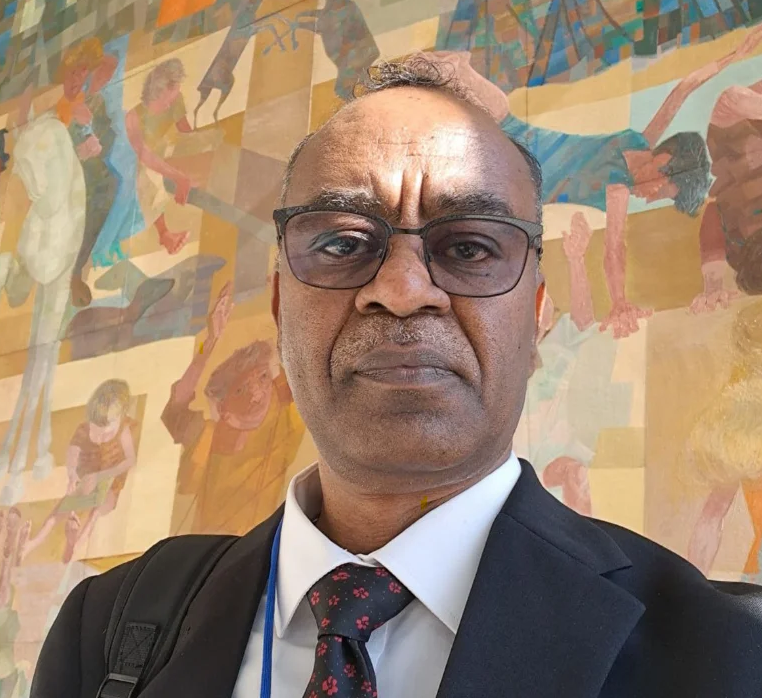
In the context of exploring the possibility of returning the country to the path of peace and democratic transition, Sudan Scope has opened the file of justice with human rights expert Ali Mohamed Ajab. This interview will serve as a starting point for delving deeper into the file of transitional justice through publishing interviews with international experts who were part of global experiences in forming specialized courts and reconciliation committees.
The availability of justice is a fundamental condition for building stability amid the complexities Sudan has gone through after the December Revolution. Justice was not provided for the martyrs of the revolution, and before the Fact-Finding Committee on the sit-in dispersal crime announced its results, the war broke out and buried the issue among thousands of bodies and crimes committed under the cover of military battles or outside the arenas of conflict. Ali Ajab presented an analytical overview of the issue of justice in Sudan, comparing it with how the international justice system dealt with conflicts in African countries with similar conflict patterns to Sudan.
He also proposed solutions that support the path of justice and the end of impunity, while at the same time pushing the country toward reconciliation and social recovery. This is achieved by focusing on developing the concept of transitional justice to accommodate the complexities of the situation in Sudan, transcending all the hate speech currently prevalent, and achieving the rise of the country from the ashes of wars toward a state of law and citizenship that equates all Sudanese.
At the outset, we must note that building the foundations of transitional justice in Sudan is linked to how the war is stopped and peace is achieved on a fair basis that guarantees the resolution of the root problems leading to wars in Sudan. These include balanced development, fair distribution of power and wealth, and the establishment of principles of equal citizenship.
This ensures the establishment of an institutional state that achieves balanced development, radically reforms institutions, achieves justice, ends impunity, compensates victims, and rehabilitates them.
It should also be noted that the current war has complicated the problems faced by the glorious December Revolution. It has multiplied the scale of disasters faced by the transitional government: it destroyed infrastructure, ruined the economy, tore apart the social fabric, displaced most Sudanese, and destroyed their property.
More dangerously, it produced more militias, spread weapons, militarized civilian life, made military and security institutions more hardline and clinging to power, and involved them in more heinous crimes, whether by the Armed Forces or the Rapid Support Forces. Therefore, returning Sudan to its correct path depends on how these problems are solved and a genuine peace is built that allows for the comprehensive implementation of transitional justice.
In my estimation, the application of justice in the post-war phase will be closely linked to transitional justice. Although many Sudanese have a different idea of transitional justice, viewing it as based on forgiving criminals, many legal experts have a true understanding of all aspects of transitional justice.
There is room for reconciliation for those who desire it, but there is always the possibility of implementing criminal justice. For example, if some accused persons wish to enter into restorative justice, evidence must be available against them. In the South African experience, for instance, many accused were arrested for committing crimes.
When restorative justice procedures began in the country, the accused demanded to participate in public sessions to confess their crimes and ask forgiveness from the victims. However, the pardon decision is not linked to the committee; if their apology was convincing to the victims and they sensed its sincerity, then forgiveness could be granted. In this way, transitional justice is more comprehensive.
By definition, it is divided into justice through criminal procedures and justice through non-criminal procedures. Even in the formation of reconciliation committees, investigators will accompany them, similar to the role of public prosecutors. Their role is to proceed in the criminal direction in coordination with the police and other judicial bodies. One of the features of transitional justice is that it opens the door for victims’ families to know their fate. In Sudan, for example, people have been missing since 1989. If an accused person requests forgiveness from the families in exchange for informing them of the fate of the missing person, I expect that some would accept it instead of pursuing criminal directions.
The current war has expanded the circle of violations, complicated the nature of conflicts, contributed to the spread of weapons and the militarization of civilian communities, and led to the commission of various forms of serious crimes. It has torn the social fabric and looted the money of citizens and state institutions.
These conditions need a comprehensive view that transitional justice provides, with its ability to enforce the law, end impunity, open the way for reconciliation, and heal wounds. Another important aspect of transitional justice is commemorating the victims and providing reparations.
Because of the importance of these aspects, the parties that committed the crimes are keen to bury the issue and the memory of the victims to erase the traces of the crime. We have observed in Sudan attempts to demolish and distort memorials for the martyrs in Khartoum and Al-Obeid. In my estimation, this process does not stem from religious motives but is essentially an attempt to destroy any memory so that society forgets the victims and gives up on bringing the criminals to justice.
Because symbolizing the victims and creating memorials for them means that society is serious and interested in achieving justice for them. In my view, restorative justice can be effective in Sudan because Sudanese people are naturally inclined toward forgiveness in the case of an apology, no matter how great the crime. Therefore, many issues can be addressed through this formula. It can also save a lot of time and resources.
If the appropriate climate for implementing justice is available, Sudan will face tens of thousands of accused. Practically, it is impossible to hold trials for such a large number, and the country does not have the detention infrastructure, let alone funding for such trials. Other formulas can be useful in dealing with them, such as obliging them to compensate victims. Of course, this does not prevent other victims and their families from insisting on pursuing the path of criminal justice.
What is the internationally adopted formula for compensating victims, and which parties are obligated to provide these compensations?
According to the latest United Nations document on reparations issued in 2015, the state is obligated to compensate victims if the crime was committed by its agencies. At the same time, the state is obligated to pursue the perpetrators of these crimes, prosecute them, and oblige them to pay compensation for the harm inflicted on the victims.
The UN document indicates that victims’ compensation is not linked to the court’s conviction of the accused; proving the harm is sufficient for compensation. In Sudan’s Criminal Procedure Code, the criminal is convicted with a fine rather than paying compensation to the victim.
However, according to the experience of legal practitioners in Sudan, compensation can be ruled if requested during the litigation phase, and the harm is proven during the trial. These are all legal avenues to redress victims and prosecute perpetrators. However, the issue of compensation is not simple in implementation; there are many complexities surrounding it.
For example, in establishing a victims’ compensation fund, the state must contribute to funding the fund, but the state’s contribution will certainly not be sufficient. The fund can receive support from some countries and UN organizations if a specialized institution is created that professionally and systematically defines the victim. Global experiences indicate many problems that accompanied the work of compensation funds, as happened in Iraq and Libya, for example.
There are compensations for criminal harm, economic harm, or others. Therefore, the institution will need to prepare a compensation law that accommodates all complexities and defines compensation priorities, because in these cases there is a very wide spectrum of violations and thus a broad base of victims entitled to compensation.
The important thing in this matter is that the United Nations has experience that can contribute to drafting the appropriate law. Countries that have established such funds have largely succeeded in implementing the task despite the technical challenges of identifying victims and priorities. Therefore, although there is no experience of compensation committees in Sudan, the expertise and experiences of other countries will help accomplish this task.
The financial aspect will constitute an obstacle for Sudan due to weak resources. However, if a specialized institution is established according to international standards, there will be wide scope to attract support from international institutions. An important aspect of transitional justice is that reparations, after consultation with victims and their families, can go toward building institutions such as schools or health centers needed by the affected areas, instead of individual compensation. In general, compensation funds are designated for civilians, because anyone participating in the fighting is not considered a victim according to international humanitarian law.
With respect to the funding of victim compensation in Sudan, I believe it is of great importance to establish institutions concerned with caring for victims that have sufficient funding and the authority to obtain support from countries and international institutions. There is also a need to link compensation with rehabilitation and care for victims and their families. Focus must also be placed on looted funds and recovering them for the benefit of development institutions, including those concerned with compensating and rehabilitating victims. Even in the issue of reconstruction, these funds should be allocated to finance development projects. In short, we can say that transitional justice must be an integrated process to rebuild the state based on equal citizenship, reconsider all the problems that led to military coups and wars, and prioritize the establishment of a state of law to combat corruption, end the culture of impunity, and achieve all that realizes the slogans of the revolution: Freedom, Peace, and Justice.



