Exclusive Interview - Sudan Scope
In light of the current circumstances Sudan is witnessing, marked by complex legal and humanitarian challenges, numerous initiatives and entities have emerged to provide support and assistance to those affected. Among these active and important entities is the "Emergency Lawyers in Sudan.
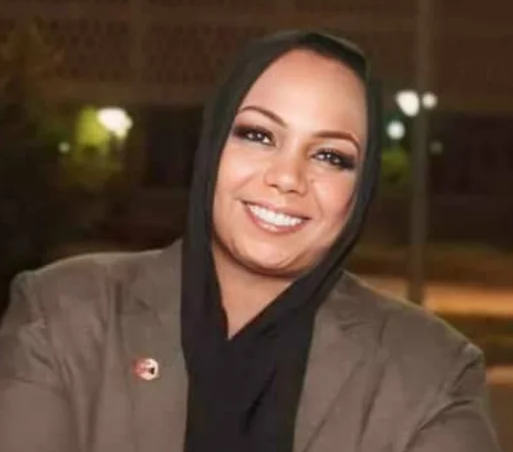
"Emergency Lawyers" is a collective of legal professionals who have dedicated themselves to providing emergency legal aid, defending human rights, and combating violations during times of crisis and unrest. This body has played a pivotal role in documenting violations, offering legal advice to victims, and contributing to efforts aimed at achieving justice and accountability. Their work requires exceptional courage and commitment, as they stand on the front lines to ensure the rule of law and protect the most vulnerable groups. To delve deeper into the nature of this body’s work, the challenges they face, and the achievements they have accomplished, we turn the pages with Professor Rahab Mubarak Sayed Ahmed, a member of the Executive Office of Emergency Lawyers.
What is the goal behind establishing “Emergency Lawyers”?
This entity began as an extension of revolutionary legal work during the era of the Salvation regime. It then took a new form after the December 2018 Revolution, with its name remaining closely linked to the time period it serves. The roots of emergency laws go back to the era of former President Omar al-Bashir, when they were used to suppress opposing voices and peaceful demonstrations. At that time, dozens of Sudanese men and women who demanded the realization of the goals of the glorious December Revolution were arrested and detained in prisons and detention centers for long periods awaiting court decisions. These practices were the main reason for the need to establish the “Emergency Lawyers” entity, which was called for by all parties concerned with the public interest of the nation. The primary goal was to confront the legal attack launched by the Salvation regime. After the formation of the groups under the umbrella of “Emergency Lawyers” was completed, tasks were distributed among individuals and groups in an organized manner. This enabled them to confront the emergency law and demand the release of hundreds of detainees through volunteer work and diligent efforts. To simplify the work, the entity formed several specialized committees. For example, a committee specialized in release on bail took on its responsibility, implemented by young lawyers. The second committee’s task was to plead on behalf of the detainees, relying on information provided in written reports from the first group, collected by another group with extensive experience in criminal litigation. These reports included vital information such as the number of detainees and the reasons for their arrest. Court decisions then led to appeals, and the legal teams confronted these appeals by drafting the necessary legal objections. This integrated work began in Khartoum and then extended to all states, with close coordination between Emergency Lawyers bodies in all Sudanese cities. During the transitional period, the role of “Emergency Lawyers” shifted from defensive to accusatory. The entity worked on behalf of the revolutionaries who were killed or liquidated during demonstrations and the sit-in dispersal period. This shift came under the name of representing the families of martyrs, meaning prosecuting security agencies and the Rapid Support Forces, after its role during the Salvation regime’s rule had been limited to defending those covered by the emergency law. With the October 25, 2021 coup, the role of “Emergency Lawyers” returned to its defensive nature for the second time. The group worked on appealing a huge number of cases related to Resistance Committees, politicians, and unionists. Among the political figures it defended were Wajdi Saleh, Khaled Omar, Ibrahim al-Sheikh, Ismail al-Taj, and others from the Resistance Committees who were thrown into Soba Prison.
To what extent can we evaluate the group’s success in confronting violations during the war phase?
During the current war period, “Emergency Lawyers” undertook two main tasks:
- Monitoring and assessing war crimes through an accurate counting process of the perpetrators of violations.
- Litigation and pleading on behalf of those affected by unfair rulings under Articles 50 and 51 (related to cooperation with the Rapid Support Forces, undermining the constitutional system, and waging war against the state).
According to the sequence of events, “Emergency Lawyers” achieved unparalleled success and became the primary reference for field-sourced information regarding all violations that occurred during the war. This is a clear indicator that the entity is active and effective, covering most war-related events, with the exception of some violations not covered due to the absence of “Emergency Lawyers” in those areas. The success rate of event coverage can be evaluated at approximately 90%. The remaining 10% is attributed to the general nature of humanitarian work and the complex field conditions.
What is the group’s method for verifying the accuracy of violations?
Since this is humanitarian work, it is prone to error; it is a human effort that may sometimes be imperfect. However, we are not alone in this field; other large groups are working with us in monitoring and documentation. Success is linked to the sequencing, documentation, and verification of information, and we have all of that. Over the past six years, we have gained a large number of people on the ground, whether former detainees, their families, or relatives. This work has provided us with good data on individuals who want any violations involving them to reach us. Ordinary people have also come to realize that there is an entity they can send details to. In the fast-paced media environment, nothing stops; everything reaches us. What has also helped us is the exchange of roles with unions, such as the Doctors’ Union and the Journalists’ Union. We have had ongoing reciprocal roles since the establishment of this entity. These roles are particularly active in cases of physical violations (with the Doctors’ Union) and ethnically targeted violations. All of this reaches us from the field and is documented with the doctors. As for journalists, they publish this work as soon as statements are issued. All media outlets, newspapers, and television deal with it. This has been a very effective role by journalists and media professionals in amplifying the group’s voice. We in the group do not state until we have verified the incident on the ground. Information comes to us from the field despite available sources. Sometimes there is difficulty accessing information, which delays the issuance of a statement, but credibility is most important to us. If this work loses credibility, especially in documenting individual violations, the information from the field may sometimes contain confusion or inaccuracy. We include these in our weekly reports and clarify any updates, corrections, or new information. But the most important thing is to seek truth, and praise be to God, we have succeeded to a very high degree.
What are the group’s mechanisms for achieving its goals besides issuing statements?
We have several mechanisms in emergency work. We do not limit ourselves to issuing statements. We have individuals in the field who can plead in some cases whenever they are allowed, as happened in Gedaref, Kassala, and Port Sudan. Some of us have been arrested for pleading in such cases, such as Montasir Abdullah, who was arrested for defending the group listed in the case led by former Prime Minister Abdalla Hamdok. We also have the mechanism of weekly documentation and monitoring, which we carry out in our office by stating all violations that occurred during the week. We also deal with the Red Cross regarding statements and arrests, such as lifting sieges or blockades on areas. We also address all parties in cases of detention, whether the army or the Rapid Support Forces. This was successful at the beginning of the war, but now we no longer receive responses clarifying whether a person or group is in detention or not. We also cooperate with all bodies that document crimes that have occurred, such as the Fact-Finding Committee. We issued a statement declaring our readiness to cooperate with any entity requesting information on violations in Sudan.
What are the challenges facing the group in developing its work and achieving its goals amid the war?
The challenges are significant, especially since the group is voluntary and operates in difficult conditions during the war without any external support. We consider what we do to be one form of the struggle imposed upon us. Our groups working in media, monitoring, and documentation try as much as possible to operate discreetly to avoid any harassment. However, some of our groups are well-known and constantly face threats, blackmail, and harassment in countries that do not respect freedoms and freedom of expression. Moreover, some of us have been banned from airports and prevented from issuing passports, as happened to our colleague Hanan Hassan. Some of our members are currently in prison. Others have been killed due to war conditions, such as Essam Abdel Hafeez, and some remain forcibly disappeared with no information about them to this day.
What are the threats facing members of the group as a result of their activities (before and after the outbreak of war)?
The main threats are open complaints against many Emergency Lawyers members, and threats via voice messages sent to our phones, such as “You won’t come back to Sudan again,” or accusations that we are the political wing of the militia. Despite the fact that this body sometimes issues three or four statements, three of which condemn Rapid Support Forces violations, as soon as we issue a statement condemning the army, we are immediately labeled as “D3amiya” (RSF supporters). The same pattern is repeated by the other side when we publish its violations. You are always accused by the warring parties. As a result, most Emergency Lawyers members have been displaced and could not remain in the country due to repeated threats. Many have been imprisoned; others have been banned from travel, in addition to those who died in this war.
To what extent does the local community interact with the efforts of Emergency Lawyers?
I see that the local community interacts with us very strongly as the Emergency Lawyers group. This interaction has enabled us to obtain and collect information from the field with ease, which was very important in making the information, statements, monitoring, and documentation we publish spread widely. This is because the community feels that the group is balanced and trustworthy, which is true, because its mission is to deliver correct information and empower the Sudanese citizen with information about the violations committed by both warring parties against the Sudanese people. For all these reasons, the community’s interaction has been excellent and very important to us.
Away from the work of professional groups… You have ongoing documentation efforts for violations. How can such issues be monitored accurately amid funding challenges?
We received courses on monitoring and documentation work and applied them practically in training workshops, which was very important.Since the beginning of the war, I started collecting information because in the first six months of the war, there was no one who could gather its threads. Everyone was looking for a place to flee or migrate to escape the hell of war, and it was difficult for people in conflict areas to communicate information. Therefore, it was necessary for us to fill this gap.At that time, I was in a relatively calm area, which gave me the opportunity to collect information and communicate with the field. People began contacting me daily with all details of what was happening to them. This led to the idea of weekly documentation, which continues to this day.For me, this has been an extremely difficult effort that sometimes took the entire day or three-quarters of it, because I spent this time focusing on messages from the field, phone calls, or social media. It was certainly a hard and exhausting effort, but it was necessary because these are people’s rights. If we remained silent, they would be lost.Although these efforts have come at the expense of my health and my own money (I cannot leave my phone without credit for calls and internet all day), as I explained, it is a tax for the homeland and a humanitarian responsibility first and foremost. I have taken a vow upon myself to do this for Sudan and not to fall short in my duty to the Sudanese people, so that Sudanese people feel that there is someone who feels their suffering. When they lose a loved one, they find someone who cares and documents it, considering them an important human being. The kidnapped person knows there is someone who worries about them and works to secure their release until the time of accountability and justice comes.It is very important for people to document these crimes and not wait to be paid to document such violations and crimes.
What is your vision for the possibility of applying transitional justice in Sudan if the war stops?
Transitional justice in Sudan has become an urgent need. Now, during wartime and until peace is reached, we need to talk about a transitional justice program, which is the number one program that should be followed to mend the social fabric after the major rift caused by the ongoing war. Currently, Sudanese society suffers from fragmentation, hate speech, regional and tribal discourse, increased violence, and the spread of weapons and multiple militias. These problems can only be solved through genuine reconciliations, a policy of no impunity, reparation for harm, and spreading a culture of peace within communities. All of this is achieved through transitional justice. In the past, the motive for revenge was knowing which side killed or retaliated against someone. But now, the entire Sudanese people have become martyrs, and people are dying without knowing who killed them. Everyone in this war is affected, but the biggest victim is Sudan itself. Therefore, the necessity of establishing the concept of reconciliation is very important. At the same time, those who ignited the spark of this war must not escape punishment to address the roots of the problem. Every person who committed a crime must be held accountable, because the war did not target specific communities but affected all communities and reached Sudanese homes due to the division over positions for or against the war. Transitional justice is the key to solving these problems. Programs must be designed in line with the vision of the Sudanese people regarding peace and ending this war. The flavor of these programs must be Sudanese. Experience is the best proof. As Sudanese, we possess the experience and history. We only need to create the Sudanese template that helps heal from the diseases of hatred, resentment, and regionalism, because they are the main causes of wars. If these diseases are treated, the problem will be solved. In addition, the entire justice institution must be reformed to truly represent and defend citizens’ rights. Laws concerning the Sudanese people must be reformed to align with natural laws in Sharia and religion, as well as positive laws, human rights and freedoms, and international humanitarian law. There must also be one professional and national army, and an end to militias that bring nothing but evil and are a real threat to peace and stability. Therefore, a transitional justice program with a Sudanese flavor must be designed so that everyone reaches safety.



