
Returning from the Edge of Survival to the Horizon of Reconstruction
Ahmed Abdulazim Macki
Since the emergence of the modern Sudanese state, through independence and the years that followed, Sudan has never truly been modern. The iron face of modernity - industry - was largely absent. Like any country weighed down by successive dictatorships and prolonged wars, machinery in Sudan fared little better than the country itself. Aside from brief and limited flashes of progress, Sudan never entered an era of industrial renaissance, remaining instead captive to poverty, a traditional economy, and dependence on imports. In the months preceding the war, official estimates indicated that the industrial sector contributed no more than 17% to GDP. In 2021, Sudan’s GDP stood at $34.3 billion, with agriculture contributing 32.7%, services accounting for most of the remainder, and industry contributing only around 21%.[1] By comparison, neighboring Chad derives nearly 45% of its GDP from industry.
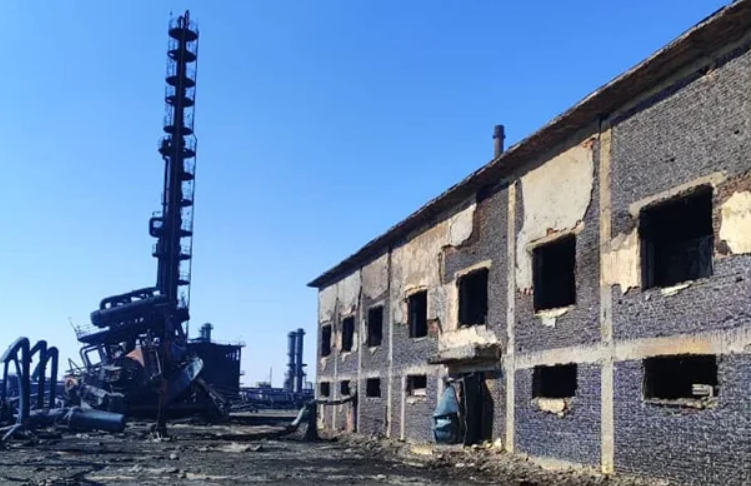
With the outbreak of war in Sudan and its unprecedented spread across the country, the industrial infrastructure was almost destroyed. In the capital, home to most of Sudan’s manufacturing industries, reports suggest that 90% of industrial facilities suffered total or partial destruction. Estimates from the International Food Policy Research Institute indicate that the industrial sector alone lost more than 50% of its value since the war began.[2] Power stations, infrastructure, and human beings themselves were not spared. Sudan witnessed what the United Nations High Commissioner for Refugees described as the world’s largest displacement crisis, with the number of displaced Sudanese reaching approximately 14.3 million by the end of 2024, equivalent to one in every three Sudanese citizens.[3] Many sought refuge in nearby labor markets, particularly in the Gulf countries, offering their technical and managerial expertise. This provided a haven for Sudanese professionals connected to the industrial sector. Specialized studies estimate total job losses at over 5.2 million, including 2.7 million in the service sector alone.[4] Sudan has lost those skilled individuals whose expertise was forged amid the noise of its workshops, factories, and difficult conditions. Replacing them will not be easy; for many, burdened by responsibilities and ambitions, Sudan may have lost them forever.
In the vital oil sector, the Al-Jaili Refinery, located north of Bahri City, represented the backbone and beating heart of Sudan’s petroleum industry. Built a quarter century ago with a production capacity of 100,000 barrels per day, the refinery became the site of fierce battles after the Rapid Support Forces seized it at the beginning of the war until the Sudanese army recaptured it in January of last year. These confrontations included heavy shelling and air strikes that destroyed the facility, making any near-term restoration of operations virtually impossible. In 2024, Sudan produced only 64 tons of gold, generating a mere $1.57 billion for the exhausted treasury, while agricultural exports declined by 43%.[5] This serves as additional evidence that the oil and resource sectors have collapsed and are unlikely to recover soon. Yet the greatest loss will undoubtedly be the thousands of engineers and skilled workers who lost their jobs and began searching for alternatives to shield themselves from poverty and deprivation.
The electricity sector fared no better than the oil industry. Already weak and insufficient before the war, Sudan’s electricity production capacity shrank further due to repeated attacks on transformer stations in Merowe, Umm Dabakar, and Omdurman, in addition to systematic sabotage targeting transformers, cables, and power lines. These attacks severely limited electricity access, with some regions enduring months-long blackouts, leaving devastating consequences for both healthcare and agriculture. Even with industrial consumption largely absent, existing logistical obstacles pushed many people to seek sustainable off-grid energy alternatives, signaling a fundamental transformation in Sudan’s energy landscape. Nevertheless, the challenge remains immense, as reviving industrial activity in Sudan will require production capacities far exceeding pre-war levels.
As for the future of industry in Sudan, the war has introduced numerous challenges. The widespread destruction described above pales in comparison to the catastrophe of the war’s continuation and its direct impact on people and the environment. Sudan’s economy, which stood at $56.3 billion in 2022, shrank to below $32.4 billion by the end of 2025, a contraction of nearly 42%.[2] It is not only people who have left Sudan; investment, financing, and confidence have also fled unwillingly. A joint report by the United Nations Development Program and the Institute for Security Studies warns that even under the optimistic scenario of achieving peace in 2026, Sudan is projected to lose approximately $18.8 billion in GDP by 2043.[6]
Equally tragic is the absence of any immediate prospect for a peaceful resolution to the conflict. The destruction inflicted upon industry has spread to other sectors, especially agriculture and healthcare, foreshadowing multiple disasters from which there can be no escape except through an urgent end to the war and swift efforts to address its catastrophic consequences. As for restoring economic activity, it is more important to question the fragile state of the economy even before the war: what led us here, and how can those mistakes be avoided in the birth of a new Sudan?
For Sudan to become a nation capable of recovery, it must ask the right questions and develop long-term industrial strategies rooted in its agricultural production and mineral resources. Such a path could offer millions of Sudanese the opportunity to rebuild their lives and meet their basic needs. The transitional government had already begun addressing some of these questions. At the 2021 Paris Conference, international donors gathered and pledged support for Sudan’s democratic transition, announcing financial packages exceeding one billion dollars to support economic restructuring. It was a rare moment in which the world opened itself to Sudan after decades of isolation.
Former Prime Minister Abdalla Hamdok’s “Five Economic Pillars” represented an integrated economic vision based on exchange rate liberalization, support for agricultural production, infrastructure development, expanded partnerships with the private sector, and Sudan’s reintegration into the international financial system following its removal from the terrorism list. It was a promising roadmap toward a different Sudan. However, the October 2021 coup abruptly destroyed that momentum, closing doors whose opening had required years of difficult diplomacy and painful reforms. The question remains: how long will Sudan need to return from the brink of survival to the horizon of reconstruction?
References.
[1] Sudan Tribune — IMF warns of devastating GDP contraction in Sudan (2024): https://sudantribune.com/article282396
[2] IFPRI — Sudan's war is an economic disaster: Here's how bad it could get: https://www.ifpri.org/blog/sudans-war-is-an-economic-disaster-heres-how-bad-it-could-get/
[3] UNHCR — Global Trends 2024 / Sudan Displacement Crisis: https://www.unhcr.org/global-trends
[4] PMC / Health Science Reports — The Effects of Sudan's Armed Conflict on Economy and Health (2025): https://pmc.ncbi.nlm.nih.gov/articles/PMC11803073/
[5] Africanews — Sudan's war has left the country's economy shattered (2026): https://www.africanews.com/2026/01/14/sudans-war-has-left-the-countrys-economy-shattered/
[6] Al Jazeera — Erosion of a country's future: What has the war cost Sudan? (2026): https://www.aljazeera.com/news/2026/4/15/erosion-of-a-countrys-future-what-has-the-war-cost-sudan



