
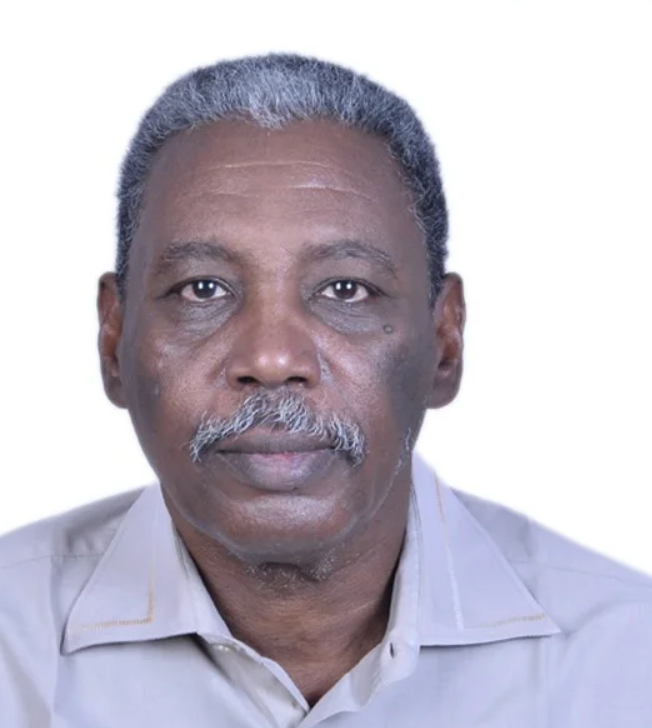
Khalid Mohamed Taha – Journalist interested in humanitarian and human rights issues.
Abstract:
This article seeks to provide a comprehensive analytical reading of the state of Sudanese journalism before and after the outbreak of the April 15, 2023 war, by tracing the transformations in press freedoms, the professional working environment, and the nature of the risks faced by journalists and media institutions.
The article argues that Sudanese journalism, despite the limited margin of freedom that emerged after the December 2018 Revolution, continued to suffer from legal and structural fragility that left it vulnerable to regression and contraction, amid the persistence of restrictive laws and political and economic pressures.
It further shows how the war led to an almost total collapse of the media system, turning journalism into an activity fraught with physical, psychological, and professional danger. With the destruction of infrastructure, the displacement of journalists, and the monopolization of media narratives by the warring parties, the result was a vast information vacuum and a decline in the role of journalism in protecting society and fostering public dialogue.
Based on this diagnosis, the article proposes a reform-oriented approach that goes beyond partial solutions and is grounded in a rights-based and structural perspective linking press freedom, journalist protection, economic independence, and professional innovation as essential conditions for rebuilding an independent and professional media sector in the post-war period. It emphasizes that restoring the role of journalism is a necessary entry point for rebuilding the public sphere and supporting pathways toward peace, justice, and democratic transition in Sudan.
Freedoms, Work Environment, Risks, and Reform Prospects
Throughout its history, Sudanese journalism has constituted one of the most important arenas for public expression and oversight of authority. It has been a core pillar of the public sphere, a central tool in knowledge production, the consolidation of transparency, the promotion of accountability, and a contributor to social peace, despite the repeated restrictions and repression it has faced.
The Sudanese experience reveals a turbulent relationship between authority and the media, historically marked by restriction, politicization, and direct interference. This has limited the development of independent and sustainable journalism. Journalism should therefore be understood as a public right rather than merely a profession, and press freedom as an extension of society’s right to knowledge. Reducing the impact of media restrictions is essential for strengthening transparency, accountability, and social peace.
With the outbreak of the war on April 15, 2023, Sudanese journalism entered an unprecedented phase of contraction and violation, shifting from a fragile and restricted situation into a state of near-total collapse. The journalistic work environment became hostile and dangerous, and the press lost even the minimum conditions of safety and continuity. Violations were no longer confined to restricting freedoms, but extended to threatening the physical existence of media institutions and the safety of journalists themselves.
In practice, Sudanese media entered a complex and sensitive situation that affected the ability of media institutions to perform their role in conveying reality, protecting society, contributing to national dialogue, and rebuilding trust among Sudanese citizens. The war, which harmed people and society, also exposed limited media capacity in confronting its challenges and consequences. This makes evaluating the media reality, understanding its challenges, and planning for the future of Sudanese media among the most urgent priorities for the civil track of national dialogue and reconstruction.
Before the War
Sudanese journalism was living in a fragile and contradictory state. On the one hand, the December 2018 Revolution opened a relatively broader space for freedom of expression, reduced direct security censorship temporarily, and allowed the return of some newspapers and writers to the public sphere, raising the ceiling of expression on political and social issues.
On the other hand, this margin remained limited, fragile, and legally unprotected, due to the absence of comprehensive legislative reform and the continued dominance of the state and security agencies over the media sphere, as well as the lack of constitutional and legal guarantees that protect press freedom as a public right rather than a political grant.
Restrictive laws, especially those related to security and publishing, continued to exist, and state interference in managing the media sphere persisted through various means such as confiscation, economic pressure, legal prosecution, and indirect threats. The slogan “A free press, or no press” remained strongly present in the general journalistic scene and in longstanding demands.
Before the war, journalists faced several challenges that weakened professional independence, most notably: restrictive laws, pre- and post-publication censorship, newspaper confiscation, targeting journalists through lawsuits and unofficial threats, economic pressures, and low wages. Despite this, there was still a real possibility for field reporting and producing relatively critical content, especially on economic, political, and social issues.
The work environment before the war was characterized by a degree of relative stability, compared to what followed. Media institutions existed, and field reporting was possible despite economic crises and weak infrastructure. Digital media and independent platforms also emerged as partial alternatives to traditional journalism, contributing to expanding public debate to some extent.
However, this reality was burdened by deep structural flaws, most notably fragile funding, low wages, lack of social protection, and weak union organization. This negatively affected professional independence and content quality and left journalism vulnerable to political and economic blackmail.
Accordingly, the state of journalism before the war can be described as a restricted space, prone to contraction or regression at any moment, allowing limited professional practice but lacking the necessary guarantees for independence and sustainability.
Sudanese Media During Wartime
Major transformations occurred in the journalistic landscape after the war erupted, particularly the collapse of media infrastructure. Reports indicate that the war destroyed a large portion of Sudan’s institutional media infrastructure. Many media organizations were damaged, while many journalists fled or were displaced from conflict areas, creating an “information vacuum” at the heart of Sudanese society. The war did not merely “increase restrictions”; it threatened the very existence of journalism.
The war caused an almost complete disintegration of the journalistic work system in Sudan. Most print and radio institutions inside conflict zones came to a near-total halt. Local radio stations and TV channels were disrupted, media headquarters were looted or destroyed, and journalists were directly targeted through killing, arrest, kidnapping, and threats by the warring parties.
A large number of journalists were forced into internal displacement or external asylum. This forced displacement emptied the scene of its professional cadres. Since journalists are not merely neutral observers but members of a society affected by violence, they inevitably suffer its psychological, ethical, and professional impacts.
With the vacuum created and the suspension of some traditional institutions from broadcasting inside the country, while others were forced to operate from exile or through alternative digital means (relying on communication with journalists still inside the war zone), the greatest dependence shifted to social media platforms, which became a primary source of information, despite often spreading rumors and inaccurate news.
Internet and electricity outages also obstructed media work, opening wide space for rumors, the dominance of war propaganda, and the decline of professional journalism in favor of mobilization and incitement media.
In this context, press freedom was no longer merely a legal issue—it became a matter of survival and personal safety. Journalism shifted from being a watchdog actor in the public sphere to becoming a direct victim of the conflict, losing its ability to perform its core functions: reporting, verification, and providing reliable knowledge to society in a critical moment.
Under armed conflict, press freedoms declined to their lowest levels, as the warring parties sought to monopolize the media narrative, claim exclusive truth, and criminalize any independent or critical discourse. The war created an information vacuum filled by armed actors. Journalists became targets simply for adhering to professional standards, automatically accused of bias—especially when documenting violations or exposing the humanitarian and environmental consequences of war.
With the collapse of the press’s economic model (advertising stoppage, infrastructure destruction, forced migration of skilled staff), journalism turned into fragile voluntary work, because press freedom cannot survive without economic sustainability.
Sharp polarization also contributed to the erosion of the public sphere and public trust in media, the dominance of mobilization and propaganda discourse, and the decline of investigative and analytical journalism in favor of fast, unverified, or politically directed content—while “de facto censorship” was imposed through the power of weapons.
Thus, journalism’s role in reducing polarization, preventing escalation, covering conflict through a civilian rights lens, and preparing for peacebuilding and social justice efforts was largely absent.
The marginalization of journalism also halted dialogue on the nature of the state and the necessity of positive change. It became nearly impossible to address the political economy of war, the breakdown of the social contract, or to transparently report what was happening in rural and conflict zones. This absence contributed to the spread of environmental violations in areas such as mining, land, and water, enabling the looting of resources without accountability.
Multiple Risks Facing Sudanese Journalists
The risks facing journalists in Sudan during the war have been complex and interconnected. They include direct physical risks such as killing, injury, arbitrary detention, and enforced disappearance; psychological risks resulting from constant exposure to violence, fear, trauma, and loss of security; professional and economic risks such as job loss, income disruption, and the collapse of media institutions; and escalating legal risks due to the absence of effective protection and accountability mechanisms and the prevalence of impunity.
In this regard, UNESCO states:
“Amid these upheavals, Sudanese media have suffered severely. By May 2025, at least nine journalists have been killed while doing their work since the war began. Reports indicate that nearly 90% of the country’s media infrastructure has been destroyed, and around 1,000 journalists have been displaced, leaving large segments of the population in an information vacuum without access to life-saving information. In this context, misinformation, disinformation, and hate speech spread widely and rapidly. Despite these difficulties, journalists continue to cover the humanitarian situation.”
Reform and Rebuilding Sudanese Journalism
Rebuilding Sudanese journalism requires a comprehensive approach that goes beyond partial and temporary solutions, linking legal reform, protection, and sustainability. This includes:
Reforming the legal and institutional framework: Repealing restrictive laws, enacting legislation that guarantees media independence and pluralism, strengthening the right to access information, and separating media from executive dominance.
Protecting journalists and ensuring their safety: Integrating journalist protection into any political arrangements to end the war, and activating national and international mechanisms to monitor violations and hold perpetrators accountable.
Rebuilding media institutions: Supporting independent media outlets and strengthening digital and community media as a strategic option and realistic alternative for rebuilding the public sphere in the post-war phase.
Strengthening professionalism and journalistic ethics: Training in conflict reporting, combating hate speech and war propaganda, promoting conflict-sensitive journalism, and anchoring journalism in human rights principles.
Ensuring economic independence of media: Developing transparent and sustainable funding models that reduce political and economic dependency, supporting affected journalists socially and professionally, and preserving journalism as a public institution serving society.
Given this fragile reality shaped by conflict, it is also necessary to introduce non-traditional solutions in journalism, where innovation becomes a structural necessity rather than a technical luxury. Journalism in war environments suffers not only from political restrictions, but also from the collapse of traditional work models, security exposure, institutional disintegration, and loss of societal trust.
Therefore, required solutions must be transformative, not merely partial reforms, ensuring journalism remains alive, independent, and meaningful, such as:
Establishing decentralized journalistic networks based on small independent units (community journalistic cells) without fixed headquarters or hierarchical administration, reducing security risks and breaking the monopoly of centralized narratives.
Integrating environmental journalism with conflict journalism to monitor the relationship between war, natural resources, and environmental violations, shifting the environment from a marginal topic into a key analytical entry point.
Activating protective participatory journalism by involving citizens as sources and partners—not exposed “correspondents”—through technical and legal protection layers, separating source identity from content using editorial intermediaries.
Redefining exile from a position of weakness into a site of knowledge production by establishing Sudanese “newsrooms” abroad connected to secure internal networks, transforming the diaspora into a source of funding, expertise, and political protection.
Developing proactive peace journalism by moving from post-conflict coverage to monitoring early warning indicators using community data to track hate speech, resource disputes, and armed movements.
Adopting innovative funding models such as issue-based crowdfunding through solidarity subscriptions or partnerships with research centers instead of commercial advertising, freeing journalism from political and economic dependency.
Linking journalism to scientific research and shifting from “news journalism” to “public knowledge journalism,” producing explanatory and analytical content that simplifies complex issues such as war, economy, environment, and food security.
The success of these solutions requires a strict ethical framework that protects victims and sources, and a rights-based approach that places freedom of expression within the broader system of social justice, while localizing knowledge and avoiding copying models unsuitable for the Sudanese context.
In war contexts, journalism is not merely a transmitter of facts; it is a tool of knowledge resistance, a guardian of collective memory, and a contributor to rebuilding the public sphere. Thus, innovative solutions are not an optional add-on, but a condition for journalism’s survival.
Sudanese media today is living through one of its most difficult periods. The challenges it faces are not merely professional obstacles, but reflections of a deeper conflict within Sudanese society itself. The Sudan war experience shows that the crisis of journalism is not solely produced by war, but by a long accumulation of repression, marginalization, and the absence of reform, a deeply rooted structural crisis linked to the nature of the state and its relationship with the public sphere.
However, the post-war period offers, despite the pain, an opportunity to rethink journalism’s role as a cornerstone of peace and democracy. Rebuilding journalism after the war is an indispensable condition for any sustainable democratic transition and the building of a civil state. Peace, justice, reconstruction, and preventing future wars cannot be achieved without a free, professional, and safe press capable of restoring trust, protecting collective memory, and contributing to building a future based on knowledge and fairness.
[1] (Support for Sudan Media Forum's 'Silence Kills' campaign) Free Press Unlimited – 6 November 2024 – Link
[2] (The Media Landscape in Sudan During the War) Mohammed Babiker Al-Awad – Aljazeera.net – 2 May 2025 – Link
[3] Despite the dire circumstances, journalists in Sudan continue their work with remarkable resilience – UNESCO – 2 June 2025 – Link



