
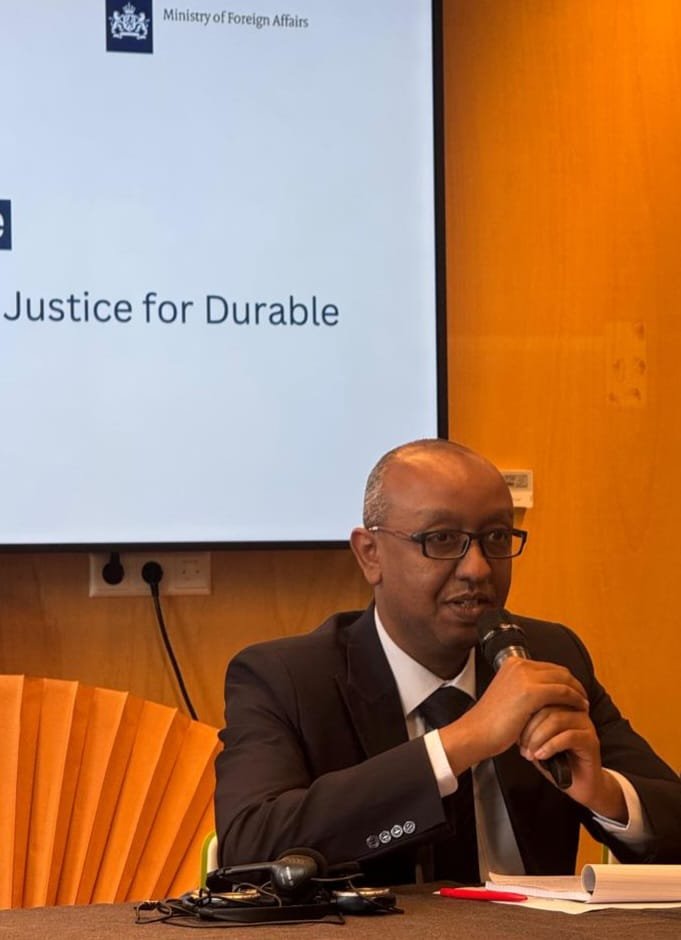
Alkabashi A. Abdelwahab
Transitional justice can be defined as the process through which countries and individuals address widespread violence, mass atrocities, and human rights violations committed during periods of authoritarian rule and civil war. Sudan experienced both forms of conflict, making its transitional justice process particularly complex and arguably more challenging than in other countries with similar circumstances.
Sudan’s modern history is marked by a painful, recurring cycle: war and dictatorship give way to popular resistance; popular resistance opens a window for civilian rule and peace; and then military intervention closes that window before the country can consolidate democracy and resolve its conflicts.
The lesson from Sudan's history is difficult to ignore: military solutions have repeatedly failed to resolve the country's political and social conflicts.
Peace agreements have been signed, only to be undermined by political exclusion, institutional weakness, or the unilateral decisions of those who hold power. Democratic openings have repeatedly emerged through popular resistance, only to be interrupted by military intervention before democratic institutions could become strong enough to protect themselves.
The tragedy is not simply that Sudan has experienced so many wars and authoritarian regimes. It is that, time and again, Sudanese civilians have demonstrated their willingness and ability to create openings for peace and democracy, only for armed actors to seize the political process before those openings could mature.
Sudan's history therefore offers a warning as much as it offers a lesson: there will be no lasting peace without democratic civilian rule, and there will be no sustainable democracy without resolving the country's wars through political settlement that includes transitional justice as a core pillar rather than military victory. Sudan’s path toward national recovery can only be built on a credible transitional justice process, capable of healing the nation’s deep wounds, restoring trust, holding the perpetrators accountable, and finally placing chapters of war and authoritarian rule where they belong: in the history books of Sudan.
A Sudanese path for transitional justice cannot wait for a decisive battlefield outcome that history shows will not come. It must be designed as the political settlement itself: a public, sequenced process that civilians own, that armed actors cannot rewrite at will, and that treats truth, accountability, repair, and institutional change as one package rather than as optional afterthoughts.
Clarity begins with what the process is for. It is not only to punish a few commanders after the fighting stops. It is to break the pattern in which each war produces a new set of armed veto-holders, each dictatorship recycles the last one’s security services, and each peace deal bargains away victims’ claims in exchange for a temporary ceasefire. That means four tasks must move together. First, a national record of harm, from Darfur and the Nuba Mountains to Khartoum, Gezira, and the current war, so that no region’s suffering is traded against another’s. Second, credible routes to accountability that combine Sudanese courts, where they can be rebuilt and insulated, with complementary international mechanisms already seized of older crimes. Third, reparations that are material and symbolic: restitution of land and property, support for survivors of sexual violence, and recognition of communities erased or displaced. Fourth, reform of the army, police, judiciary, and civil service so that the same institutions cannot again become instruments of exclusion.
Cohesion depends on sequence and ownership. Documentation and victim participation can start before a comprehensive ceasefire; prosecutions and security-sector overhaul cannot be left to the winners of the last offensive. Temporary immunities offered to lure parties into dialogue must be time-bound and cannot cancel complainants’ rights. A process designed in Port Sudan or by one coalition, and imposed on the rest of the country, will repeat the exclusion that destroyed earlier agreements. Sudanese civic networks, professional bodies, women’s groups, and displaced communities have already shown they can open political space; they must set the terms of justice rather than be invited in after the bargain is struck.
Lasting peace will not arrive by one force declaring victory. It will arrive when the country’s wars are closed by a settlement that civilians can defend, and when the chapters of atrocity are written into public memory instead of being left for the next armed actor to reopen.



