El-Obeid - Sudan Scope
Executive Summary
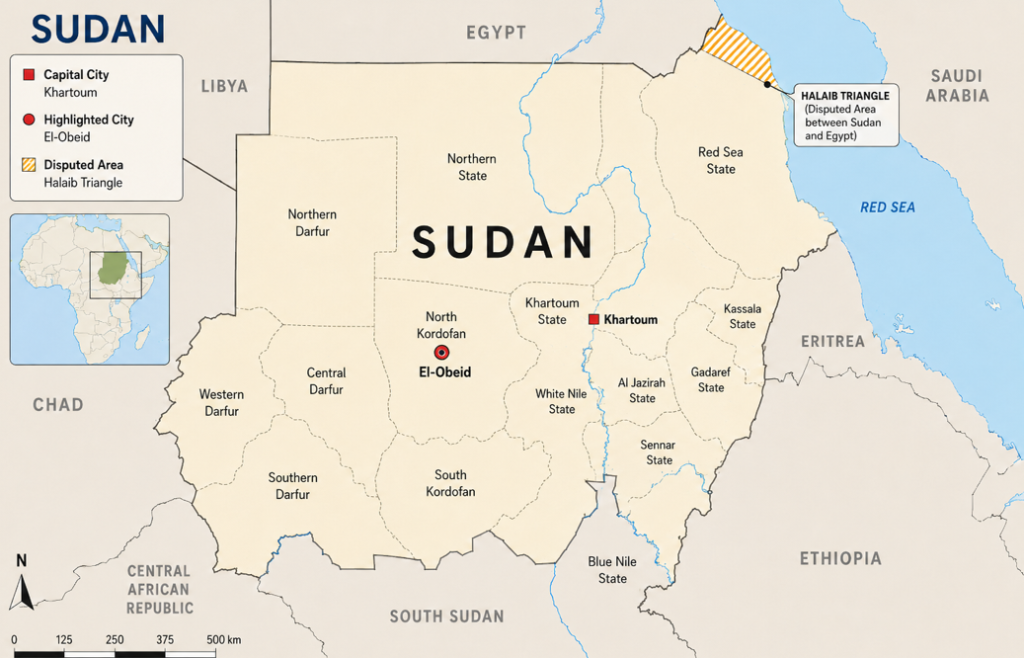
UN humanitarians, particularly the World Food Programme (WFP), have highlighted the escalating hunger crisis among over 100,000 internally displaced persons (IDPs) sheltering in camps in El Obeid, North Kordofan. Reduced food rations are being shared among families due to widespread lack of income. Water, fuel, and other essentials are in short supply amid ongoing siege-like conditions, drone strikes, and funding constraints. Sudan continues to face the world's largest displacement crisis, with nearly 20 million people acutely food insecure.
Key Findings
- Scale of Displacement and Needs: WFP is currently assisting over 100,000 people in El Obeid camps but plans to scale up support. Nutrition assistance reaches 17,000 children. Many more displaced individuals in the city require urgent aid.
- On-the-Ground Realities: An elderly woman met by WFP's Country Director Abdallah Alwardat relied entirely on reduced rations and struggled to transport food back to her tent, seeking shared costs for a tuk-tuk. Families share limited rations as they have no other income sources.
- Broader Context: Over three years into the conflict between the Sudanese Armed Forces (SAF) and Rapid Support Forces (RSF), more than 14 million people are displaced. El Obeid has faced 18 months of siege and continuous threats. Food, water, and fuel shortages are severe, with limited commercial supplies reaching the city.
- Humanitarian Response and Challenges: WFP has delivered food for July and pre-positioned for August but is limited by resources. Access exists, but funding is critical to sustain operations. A recent mission helped alleviate fuel shortages.
Why It Matters
- Rapidly worsening hunger in a key hub.
- Risk of further escalation and displacement.
- Funding shortages threaten life-saving aid in the world's largest humanitarian crisis.
Call to Action: Increased financial support is urgently needed to maintain and expand assistance.
Share:



